
What does assisted living do to support senior mobility?
Assisted living can help older adults remain active by combining safe surroundings, regular movement, daily support, and opportunities to participate in ordinary routines. The goal is not simply to prevent falls. It is to help residents maintain strength, balance, confidence, and independence for as long as possible.
Mobility may include walking across a room, standing from a chair, getting dressed, using stairs, entering a dining area, or moving safely outdoors. Assisted living support is often designed around these everyday activities rather than exercise alone.
A resident may receive help with tasks that have become difficult while still doing the portions they can manage independently. That balance helps prevent unnecessary physical decline.
How does the physical environment affect mobility?
A thoughtfully designed setting reduces obstacles that can make walking and transferring more difficult. Common features may include:
- Clear, well-lit hallways
- Handrails in appropriate locations
- Level or gently sloped walking routes
- Grab bars in bathrooms
- Non-slip flooring
- Adequate space for walkers and wheelchairs
- Seating areas where residents can rest
- Easy-to-read signs and familiar layouts
These features can be especially helpful for people with arthritis, vision changes, balance concerns, or muscle weakness. A safer layout may allow a resident to walk to meals, activities, or a common area instead of remaining in a room for much of the day.
In Somerset, seasonal conditions can also affect outdoor mobility. Ice, snow, wet leaves, and uneven ground may make walking outside more difficult during parts of the year. Indoor walking routes and supervised outdoor access can give residents opportunities to remain active when weather conditions are unfavorable.
Can assisted living help residents stay independent?
Yes. Assisted living is generally intended to provide support while preserving as much personal ability as possible. Staff may assist with bathing, dressing, medication routines, or transportation while encouraging the resident to complete safe portions of each activity.
For example, a resident who can put on a shirt but struggles with buttons may be encouraged to handle the steps that remain manageable. Someone who can walk short distances may use a walker and receive assistance only when crossing a longer hallway or navigating a crowded area.
This approach matters because doing everything for a resident can unintentionally reduce activity. Maintaining independence often means providing the right amount of assistance rather than the maximum amount.
What types of movement opportunities are common?
Mobility-supportive activities may be built into the daily schedule and ordinary routines. Depending on a resident’s abilities and health needs, examples can include:
- Short hallway walks
- Seated stretching
- Chair-based strength exercises
- Balance activities
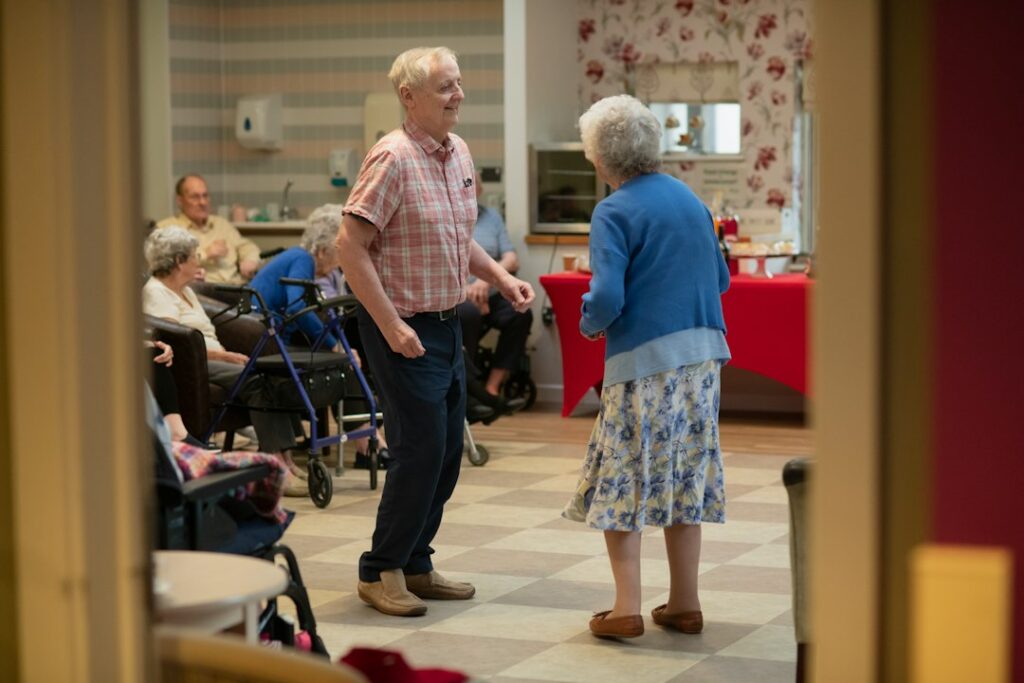
- Dancing or movement to music
- Gardening or light indoor planting
- Group games that involve reaching or standing
- Walking to meals and social programs
- Supervised outdoor time
- Practicing safe transfers from chairs or beds
Regular, modest activity is often more realistic and sustainable than occasional strenuous exercise. A few short walks spread throughout the day may be more manageable than a single long workout.
Residents should not be expected to participate in activities that cause pain, dizziness, unusual shortness of breath, or exhaustion. Movement plans should reflect individual limitations and any guidance provided by a healthcare professional.
How are walkers, canes, and wheelchairs included?
Mobility devices are tools for safe movement, not signs that a person has failed to remain independent. Assisted living staff may help residents use walkers, canes, wheelchairs, or other equipment correctly and consistently.
Support may include checking that:
- The device is the correct height
- Wheels, brakes, and tips are in usable condition
- The resident knows how to turn and sit safely
- Pathways are wide enough for the device
- Footrests and brakes are used appropriately
- The device is nearby when the resident needs to move
A wheelchair can support mobility even when walking is still possible. Some residents may walk short distances and use a wheelchair for longer outings or when fatigue increases. The appropriate choice can change from day to day.
Does assisted living address fear of falling?
Fear of falling can lead older adults to move less, which may result in weaker muscles and reduced balance. Assisted living can help by creating predictable routines, offering supervision when needed, and giving residents safe opportunities to practice movement.

Confidence often improves when a resident knows where to sit, how to request assistance, and which routes are easiest to navigate. Staff can also observe changes such as slower walking, shuffling steps, increased use of furniture for support, or hesitation during transfers.
A fall or near-fall should not be dismissed as an isolated event. It may indicate a medication issue, vision problem, footwear concern, illness, pain, or a change in strength. Identifying the cause can help reduce the chance of another incident.
How do daily routines promote movement?
Routine activities naturally create reasons to stand, walk, reach, and change position. Dining in a shared area, attending a social program, visiting a lounge, or helping with a simple activity can provide more movement than staying in bed or sitting for long periods.
Residents may benefit from having choices about how they move through the day. One person may prefer a morning walk, while another may be more active in the afternoon. Some may enjoy group programs, and others may respond better to quiet individual activities.
A routine should allow rest as well as movement. Excessive fatigue can increase fall risk and discourage future participation.
What role do therapy and health monitoring play?
Assisted living staff may notice mobility changes and communicate concerns to the resident’s healthcare team or family. A healthcare professional may evaluate pain, weakness, balance, joint problems, neurological symptoms, medication effects, or other conditions affecting movement.
Physical or occupational therapy may be recommended when a resident needs targeted rehabilitation, training with equipment, or strategies for completing daily tasks more safely. Assisted living staff can often reinforce approved exercises and safety techniques, but therapy needs should be assessed by qualified clinicians.
Health changes that deserve prompt attention may include:
- A sudden decline in walking ability
- New dizziness or repeated loss of balance
- Unexplained falls
- New weakness on one side of the body
- Shortness of breath during ordinary activity
- Increased confusion during transfers
- Persistent pain that changes how a person walks
What can families ask about mobility support?
Families evaluating assisted living can ask practical questions about how movement is supported on ordinary days:
- Are residents encouraged to walk to meals or activities when safe?
- Are there indoor walking routes during winter weather?
- How are mobility devices accommodated?
- What happens after a fall or near-fall?
- How are changes in walking ability documented?
- Are exercises seated, standing, or individualized?
- How does staff balance assistance with resident independence?
- Are outdoor areas accessible and supervised when appropriate?
The answers can reveal whether mobility is treated as part of daily life or only as a response to a medical problem.
For older adults and families in Somerset, the most useful mobility plan is usually practical, flexible, and individualized. Safe surroundings, regular movement, appropriate assistance, and attention to changing health needs can help residents remain engaged in the routines that give each day structure and purpose.
