
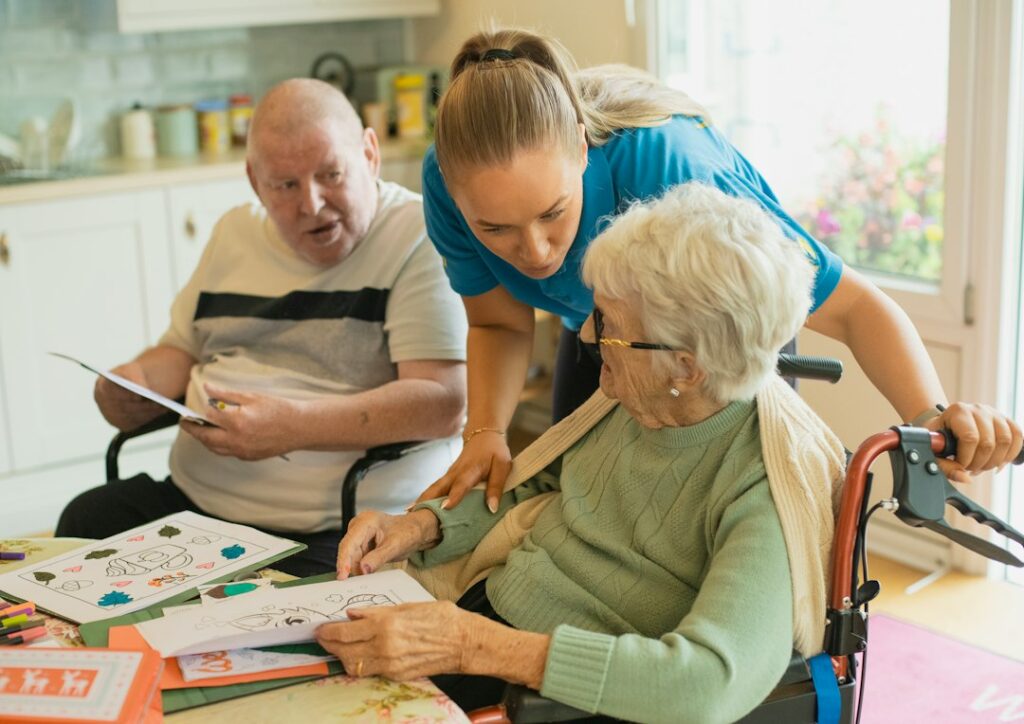
Intergenerational activities bring older adults and younger people together for shared experiences, conversation, learning, and companionship. In assisted living, these activities can support emotional well-being, mental stimulation, physical engagement, and a stronger sense of belonging.
The most effective programs are not based only on age. They are built around common interests, respectful participation, and activities that can be adapted for different abilities.
What are intergenerational activities in assisted living?
Intergenerational activities are organized experiences that involve residents and people from younger age groups, such as children, teenagers, college students, or young adults. The participants may be family members, volunteers, students, or members of the surrounding community.
Examples include:
- Reading together or discussing favorite books
- Arts, crafts, music, and seasonal decorating
- Gardening and planting projects
- Story-sharing sessions about local history and family traditions
- Board games, puzzles, and card games
- Cooking demonstrations using familiar recipes
- Technology lessons, such as using video calls or digital photo albums
- Walking groups or gentle movement activities
- Holiday, birthday, and community celebrations
The activity itself matters, but the quality of the interaction matters more. A simple conversation over a puzzle can be just as meaningful as a large event.
How do these activities benefit assisted living residents?
Intergenerational programs can improve daily life by creating opportunities for residents to contribute, connect, and remain involved in the wider community.
Emotional benefits
Regular contact with younger people may reduce feelings of loneliness and social isolation. Residents often appreciate being listened to, remembered, and included in activities that extend beyond the assisted living setting.
Younger participants can also bring energy, humor, and curiosity. A resident who is quiet during a large group program may become more engaged when speaking with one or two visitors in a smaller setting.
These interactions may support:
- A stronger sense of purpose
- More frequent positive social contact
- Greater confidence in conversation
- Reduced boredom and withdrawal
- Opportunities to express affection, encouragement, and guidance
Intergenerational activities do not replace family relationships or mental health care, but they can add meaningful social connection to everyday routines.
Cognitive benefits
Explaining a recipe, teaching a card game, answering questions about earlier decades, or helping someone complete a craft project encourages residents to recall information and organize thoughts.
Younger participants may introduce residents to new technology, music, games, or current interests. Residents may share knowledge about work, family customs, farming, military service, community history, or household skills.
This two-way exchange is more beneficial than treating older adults only as recipients of entertainment. Residents are often most engaged when their experience and abilities are recognized.
Physical benefits
Many intergenerational activities include movement without feeling like formal exercise. Gardening, dancing, tossing a soft ball, decorating a room, folding laundry for a group project, or walking indoors can encourage safe physical participation.
Activities should be adapted to each resident’s mobility, stamina, balance, vision, hearing, and medical needs. Participation may involve standing, sitting, demonstrating, directing others, or completing only part of a task.
The goal is meaningful involvement, not competition or performance.
Why can these programs help younger participants too?
Intergenerational activities benefit both age groups. Children and teenagers may develop greater comfort and respect when interacting with older adults who have different abilities or communication styles.
Younger people can gain:
- Practice listening and asking thoughtful questions
- A broader understanding of family and community history
- Opportunities to learn practical skills
- More confidence interacting across age groups
- A clearer understanding of aging and accessibility
- Positive experiences with patience, empathy, and cooperation
These programs can also challenge stereotypes. Older adults are not all alike, and younger people are not all alike. Shared activities allow participants to see individual interests, humor, knowledge, and personality rather than relying on assumptions about age.
What activities work well in a local assisted living setting?
Activities should reflect the interests of residents and the practical conditions of the community. In Somerset, seasonal weather can affect outdoor plans, especially during cold, snowy, or rainy periods. Indoor alternatives help programs continue throughout the year.
Good options include a rotating schedule of:
- Indoor gardening with herbs or easy-care plants
- Story circles focused on family traditions and community memories
- Music sessions featuring songs from different generations
- Craft projects connected to holidays or seasonal changes
- Indoor walking and movement activities
- Recipe-sharing without requiring residents to cook independently
- “Teach and learn” sessions involving knitting, drawing, technology, games, or simple repairs
- Photo and memory discussions using family-approved pictures
- Intergenerational book discussions with short reading selections

Programs do not need elaborate equipment. Comfortable seating, clear lighting, large-print materials, easy-to-handle supplies, and quiet spaces can make participation more accessible.
How should activities be adapted for residents with dementia or memory loss?
Residents with dementia can participate successfully when activities are familiar, simple, and flexible. The focus should be on engagement rather than completing a task correctly.
Helpful approaches include:
- Use short instructions, presented one step at a time.
- Choose familiar songs, textures, pictures, and household activities.
- Offer choices instead of asking broad or complicated questions.
- Allow extra time for responses.
- Avoid correcting every mistake.
- Keep groups small when noise or crowds cause distress.
- Watch for signs of fatigue, frustration, or overstimulation.
- Let residents observe without requiring them to participate actively.
Younger visitors may need preparation before the activity. They should understand that a resident may repeat questions, forget names, speak slowly, or respond in unexpected ways. A calm, respectful response is usually more helpful than trying to test memory.
What can families do to support positive interactions?
Families can help by sharing information about a resident’s interests, former hobbies, favorite music, work history, cultural traditions, or subjects that should be avoided. A short conversation before a visit can help younger participants choose appropriate questions and activities.
It is also useful to set realistic expectations. A resident may not remember a visitor’s name later but may still enjoy the conversation at the time. The value of an interaction is not measured only by what the resident recalls afterward.
Family members should also respect privacy, consent, personal space, and photography rules. Some residents may enjoy group activities but prefer not to be photographed or recorded.
What are common mistakes in intergenerational programming?
Intergenerational activities are less effective when they are designed around assumptions rather than resident preferences.
Common problems include:
- Treating residents as if they all have the same interests
- Making younger visitors perform for residents instead of creating shared participation
- Planning activities that are too long, loud, or physically demanding
- Failing to provide accessible materials
- Expecting immediate emotional connections
- Overlooking residents who communicate nonverbally
- Scheduling events without considering rest periods, meals, transportation, or weather
- Measuring success only by attendance
A smaller activity with attentive conversation may be more valuable than a large event with limited personal interaction.
How can success be measured?
Success can be observed through practical signs: residents initiate conversation, remain engaged longer, show positive changes in mood, request a repeat activity, or demonstrate skills and memories that are not often seen in routine programs.
Feedback from residents, families, staff, and younger participants can identify what felt comfortable and meaningful. Programs should be adjusted over time rather than treated as fixed events.
Intergenerational activities work best when they are consistent, voluntary, accessible, and based on mutual respect. They help assisted living remain connected to family life and the broader community while giving people of different ages a reason to learn from one another.
